

Multiculturalism
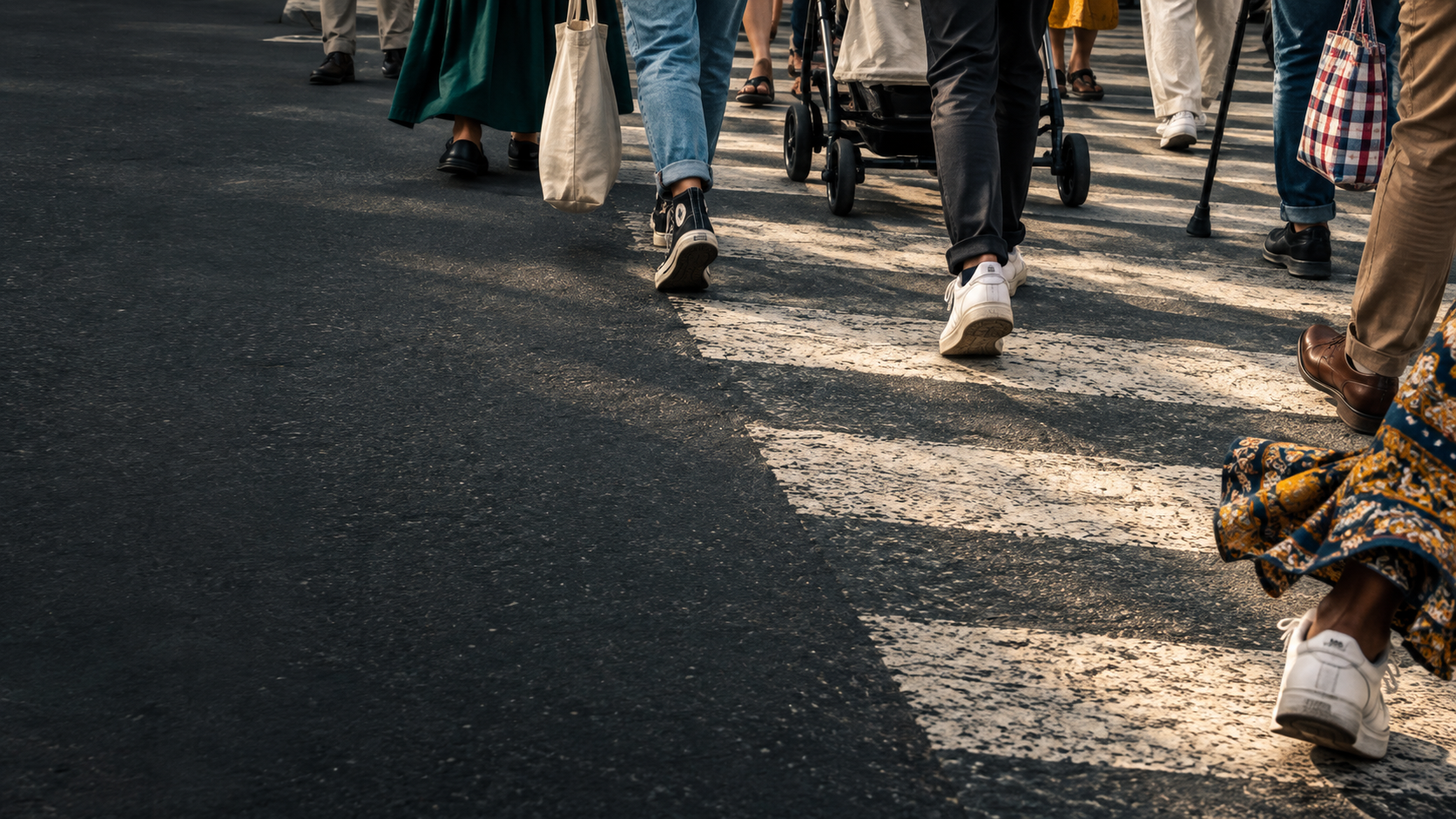
Now today we are beginning this little series which is called Sacred Cows. And I love the way Penny introduces things when she leads the service. She always... I always try and underpromise and overdeliver; she overpromises for me and then I can only underdeliver. But what we are thinking about today is we're thinking about sacred cows. What's a sacred cow? It's an idiom or a figure of speech for something that is considered immune from question or criticism. So I'm wanting us to think about some of these things that we think are really the things we probably shouldn't talk about in polite company. And today I want us to think about multiculturalism. And in the next couple of minutes I have before me, we'll only scratch the surface. And so if you want to read or think a little bit in a little bit more depth, I have made some copies up the back of an article contributed by Michael Jensen, who's a friend of mine and a good thinker, to the ABC religion and ethics section of their website. It's a really good read. I'm not going to say the things he's saying, but if you want to think about this in more depth, you can.
Multiculturalism: What is our national identity? It's a tricky question, because part of our national identity is to not think too hard about our national identity. What sort of nation is Australia? Well, the answer over the last few decades has been: we are a multicultural nation. Let's face it, we are a country of immigrants. Unless you are a First Nations person, which I think makes up around about 4% of the population (and I don't know whether there's anyone here), we are all immigrants. We are a nation of immigrants. My ancestors four generations ago were Scottish on one side and Asian on the other side. We've been a nation of immigrants from the very beginning. You've heard the joke, haven't you, about the man coming through customs at Sydney Airport and he's asked, "Do you have a criminal record?" And he says, "I didn't know it was still a requirement."
And multiculturalism has been in the news lately, as Penny has pointed out. Last month, an article in The Australian newspaper written jointly by the Archbishop of Sydney Kanishka Raffel and the chief rabbi, a man by the name of Ben Elton. In their article, they championed the diversity of Australian culture. It caused reactions all over the place, from places as widespread as Facebook to the Centre for Independent Studies, which is a conservative think tank. So good luck over morning tea; I wish you all well. I hope the conversations you have will be full of grace and kindness this morning.
Now I appreciate multiculturalism because I grew up as part of an ethnic minority. My sister, who was three years younger than me, was the only native English speaker in her class. For all her class, English was the additional language—may not have even been the second language; it might have been the third or fourth. She was the only native English speaker in her class. In early high school, all my friends were either Greek or Italian or from the former Yugoslavia, except for Kevin, who was an Anglo, and David, who was second-generation Chinese. That was the culture I grew up in. In my latter years of high school, I played first 15 rugby. Every one of my team, apart from me, was either Greek or Italian. In fact, I can remember a pre-match speech by our coach where he said, "Boys, I want you to kick that ball off, and I want the opposition to feel like they're being swarmed by hundreds and hundreds of Italian forwards."
Our children went to Anglican schools where the students comprised 70 different countries of birth. 40% of them were born in a country other than Australia. There were over 50 different languages spoken in the home; half spoke a different language to English at home. More than seven different religious faith backgrounds and 31 different Christian denominations. It was very diverse. And multiculturalism is an excellent way to include the migrants that we've invited to come and work with us for our common wealth. And indeed our country has benefited massively from those who came to help and build the nation—refugees, often post-World War II from Europe, post-Vietnam from Asia; many displaced people have come to our country to help us to build our common wealth together.
But what about the multicultural dream? It's a good dream to have because it would be wonderful for people to live in harmony with one another, freely and without coercion. It would be wonderful for people who have nothing in common other than their humanity to live at peace with each other, so that we respected each other's differences, that we would enrich each other, that we would enrich our neighbor, not denigrate our neighbor. The multicultural dream is a good dream to have. I want to suggest to you that if you're a Christian person, multiculturalism expresses our concern for the welfare of the other. You see it in there in that parable that Jesus told of the Good Samaritan—it's the great multicultural parable.
It is the Samaritan who's not expected to be the helper. Who's the helper? Jesus says he was the neighbor. It's extending hospitality to the refugee. The faithfulness of God's people in the Old Testament is often tested by the way they treat the foreigner, the refugee. There's kind of little laws in the Old Testament that God gives. So He says when you beat your olive trees to get the olives off, don't go back a second time to get them all off. Leave some leftovers. Why? You need to leave them for the fatherless, the orphans, the widows, and the foreigner or the sojourner who's traveling through your fields, that they would be fed, that there's something left for them.
It's accepting that God in His wisdom has given us different languages and different cultures. Jesus was born the multicultural kid. He was Jewish, certainly, but with a questionable lineage. When you read the genealogies at the beginning of both Matthew and Luke, you realize that there is some question about His lineage. He's born into the cultural milieu of first-century Palestine. He was a Palestinian Jew, but it was a cross-cultural world. The upheavals of the previous centuries—the Babylonians, the Persians, then the Greeks under Alexander the Great, then the Romans—the world was in absolute flux. It was a multicultural world with people moving through the world in ways that they had probably not done before or maybe even since. And the message of Jesus' death and resurrection, God's grace to people everywhere, it crossed languages, it crossed cultures like nothing else. And now when it comes to the New Testament, in Jesus all the old divisions are gone: there's no longer Jew or Gentile, male or female, slave or free, but all are one in Christ Jesus.
Multiculturalism is a good thing. I personally love multiculturalism when it comes to food. I'm profoundly grateful for things like souvlaki and linguine and puttanesca and vindaloo and sushi and slivovitz. Living in the Inner West in the early '70s, long before all those young urban professionals moved in and gentrified the area, it was a wonderful place to grow up amongst blue-collar migrants. It was a beautiful thing; I love the cultural diversity. And multiculturalism is better than the alternative. The alternative to multiculturalism is terrible. It's better than the racism of the White Australia policy, which sought to exclude non-European migrants. You recall a 50-word test in any European language, and you never knew which one it was going to be. Gradually it was dismantled—began in 1966 under the Holt government and finished by the Whitlam government in 1973. It's better than that. The nightmare of apartheid is and was a terrible thing. The nightmare of the Jim Crow laws in the United States, of segregation, of separating people on the basis of their ethnic background or the color of their skin—not only racist, it's inhumane to do it. Or the conquest of one culture over another, the imperialism, the colonialism of the 19th century, so that everyone must adopt the winning culture. The majority culture is the one that everyone must adopt; it's an oppressive way of thinking. Or even to throw everyone into the melting pot and to create a new mixed culture where we lose all our distinctives, where we just have one language which calls on us to reject our past and assimilate.
And then where do you draw the boundaries? Is it a national boundary that you draw? I'm a proud supporter of Australian rugby, but why stop there? I'm a New South Welshman, I'm not a Queenslander, and you got to be very, very suspicious of those West Australians. But more than that, I'm a Sydneysider; I don't come from Melbourne. There's nothing good down in Melbourne except for the house prices—they're much better than Sydney house prices. And why stop there? My friends in the Shire don't really know what the rest of Sydney is like because they never cross the bridge—not the Harbour Bridge, Tom Ugly's Bridge! You see, where do you stop if you're going to divide and divide and divide? What's the group that is going to be the winning group?
So in our multicultural society, it's a good thing, but is it a contradiction? Because we need to function as a society. And the more multicultural it is, the less it's a society, because the more different we are, the less it's possible to socialize. To insist that all Australians speak English, it's a terrible restriction of personal freedom, but if everyone speaks the language of their choice, it's very hard to engage socially with people. I worked for a while in a physiotherapy department at Auburn Hospital—I can say the suburb, I think that's fair enough. Every patient that we saw there required an interpreter. I at the time was supervising six students, so you can imagine trying to keep your eye on six students and six patients and six interpreters at the one time. It was pretty challenging; communication was quite difficult. And if the interpreter couldn't turn up, you had to cancel the patient. It wasn't just me, but there were so many cultures there, they found it very difficult to communicate with each other as well.
See, that's one of the problems with having a very diverse set of cultural norms: it's very hard to work out where we connect with each other. I worked with a woman once, and her faith meant that she only ate certain foods and only at certain times of the year. If we had lunch together, I was never sure whether what I was eating was offending her, or whether we could eat together today or not tomorrow, and it all became very, very complicated. And there are limits in society to multiculturalism. Do we really want several legal systems—a tribal or traditional system for Indigenous people, Sharia law for another group, British law for another? The logic of multiculturalism says yes; the realities of the world say no. Australian society is not endlessly flexible; there's a limit to how multiculturalism can be. The multicultural dream can become the multicultural nightmare as we fragment under individual choice.
As Penny pointed out at the beginning, it sits very neatly with individualism. If you are from an Anglo culture, your culture is very much shaped by individualism; the freedom of the individual is everything. If you come from, say, an Asian culture, you are very much shaped by collectivism—what's best for the group, what's best for the family. So what's the way forward? Well, in the last minute or so, I want to suggest to you that Australia is a nation shaped by its history. It's inherited a Christian culture of sorts. Now it's a complex history; it's a bit of a warts-and-all history. The early Christians, especially the chaplains in the colony—people like Richard Johnson and Samuel Marsden—they faced a lot of opposition from the hierarchy around them, so it wasn't very clear-cut. But the force of Christianity over the last couple of hundred years has made us a tolerant and an open society.
Tolerance of other cultures is not a characteristic of Afghanistan or Saudi Arabia or even communist China, but we are an open and tolerant society. Multiculturalism has grown out of an understanding of God and us and His creatures. See, the Bible says that our world is not an accident, but it is made by God. And you are made by God; you're not an accidental collection of atoms. You're made in the image of God and just as important as the person next to you, and their culture is just as important as yours is. And therefore they deserve every bit of dignity and honor and respect that you can give them. Furthermore, you are called upon by God to act morally towards them, so it's not right to treat people immorally because they come from a different nation or a different race or speak a different language. Now again, it's a complex history, but this is the sort of teaching that lay behind Christians often defending First Nations people in the colonies—and not only in Australia, but in New Zealand, the Koorie and the Maori people in the 19th century.
The early Christians used the phrase "one blood". It's taken from Paul in Acts 17:26, where he says God from one man has created all the nations—in one of the translations from the Authorized Version, "from one blood He's created all the nations"—to describe the unity of all humanity under God. Now it's a complex picture, it's warts and all, but there's no doubt in my mind that this was often the motivating factor for Christians to defend these people. And it was a very countercultural thing at the time on the back of Darwin's Origin of Species; there was a scientific belief that some races were inferior to others—"one blood", we are all unified as humanity under God. And when you come to the end of the Bible, as was read for us, the passage from Revelation where you see the throne of God, and the Lamb is on the throne, and people from every nation and tribe come before the throne of God, and it's interesting that their distinctiveness is still there. They come from every nation, every tribe. Their distinctive characteristics are still there even at the end.
Christianity has always been transethnic; it's always been transcultural. And even right at the end, it's still that transethnic and transcultural. It begins by seeing humankind in the image of God, and this is a foundation that we can't afford to lose—to see that person next to you as an absolute work of art made by the Master Creator, by the living God, who deserves every bit of dignity and honor and love. And not only that, for a person for whom the Son of God was willing to give His life. And the trajectory of the good news of Jesus, if you follow it in the Bible, is it starts in this funny little backwater and goes to the ends of the earth. And in the providence of God, the ends of the earth have come to Sydney—multicultural Sydney.
Corinthians


Other Resources

.png)
Who we are
Jesus is at the centre of all we do—and has been since our first services in 1872! We believe that the beauty, goodness and truth of Jesus are the balm our broken world needs today.
Wherever you are on your journey, there’s a place for you at Christ Church Lavender Bay.


